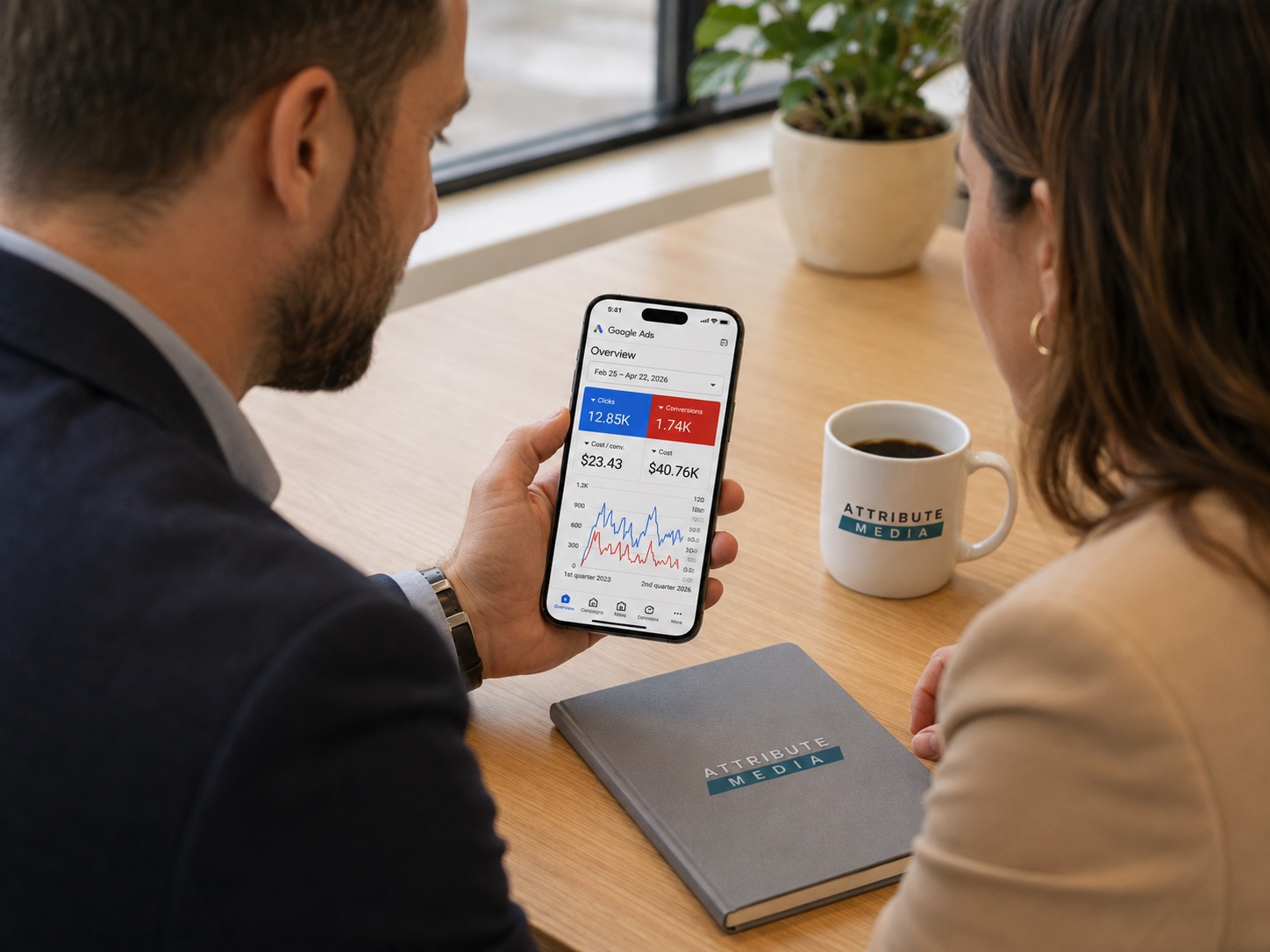
We bring two decades of what works, and what does not, to every campaign we manage.
We started managing Google Ads in 2004, when the platform was still called Google AdWords and most businesses had never heard of pay-per-click advertising. The concept of paying each time someone clicked on a search result was new, and the businesses willing to test it early built advantages that took competitors years to close.
For most of those twenty years, the majority of our work was performance-based. We generated leads and sales for clients and earned when the campaigns converted. Not before.
Running campaigns on a performance basis teaches you things that hourly billing never does. When your own income depends on the campaign converting, you look at landing pages, offers and value propositions differently. You care about cost per acquisition, not cost per click. You learn what actually works rather than what looks good in a report.
That discipline is built into how we manage every campaign today. Whether the engagement is performance-based or a retainer, we manage it as if our own money is on the line. The questions we ask first are the same ones we asked when it was.
Twenty years of Google Ads means we have seen every version of the platform, managed through every major algorithm change, and run campaigns across dozens of industries and markets. We have managed e-commerce brands, law firms, HVAC companies, SaaS products, dental practices and local service businesses. That breadth of experience changes how we read an account.
What has not changed in twenty years is the fundamental question behind every campaign: is this generating real business outcomes at a cost that makes sense? Everything else is secondary to that.
Google Ads management at a professional level is not the same activity as logging into an account and adjusting bids. Professional management begins before the account is touched: with the offer, the landing page, the conversion tracking, and the account structure. Getting these right determines what is possible at any level of ad spend.
A self-managed Google Ads account typically shares the same structural problems: broad match keywords pulling irrelevant traffic, ad copy written once and never tested, traffic sent to the homepage rather than a dedicated landing page, and no reliable way to know which keywords are generating actual sales rather than clicks. The platform has no incentive to surface these problems. It earns on clicks, not on conversions.
Professional management changes the equation at every level. The right match types and negative keyword lists eliminate waste before a single click is bought. Dedicated landing pages matched to each campaign improve conversion rates independent of traffic quality. Continuous ad copy testing separates what sounds good from what actually converts. And full conversion tracking, from the first click to the completed sale, gives you a real picture of what the campaign is producing.
Most Google Ads accounts we inherit are underperforming not because the budget is wrong or the bids are off, but because the structural foundations were never put in place. Bid optimisation on a poorly structured account produces marginal improvements. Structural changes produce step-changes in performance.
| Self-managed Google Ads | Professionally managed Google Ads |
|---|---|
| Broad match keywords burning budget | Tightly structured match types and negatives |
| Ad copy written once and left | Continuously tested against conversion data |
| Traffic sent to the homepage | Dedicated landing pages matched to each campaign |
| Clicks tracked, conversions guessed | Full conversion tracking from click to sale |
| Budget spread evenly across campaigns | Budget concentrated on what generates the best return |
| Platform optimised, offer ignored | Platform and offer both evaluated and improved |
The platform is the last thing we optimise. The offer, the landing page and the conversion path come first. That order matters.
Four areas. Each one addresses a distinct point where Google Ads budgets are most commonly wasted.
A Google Ads account structured around real buying intent, with the right campaign types, ad groups, match types and negative keyword lists, spends less to achieve more than one built around volume. We audit existing accounts and rebuild from a clear strategic foundation. Most accounts we inherit have structural problems that no amount of bid optimisation can fix.
Ad copy that sets accurate expectations attracts clicks from people who are genuinely interested and filters out those who are not. Specific, honest ads convert better than clever ones. We write and continuously test ad copy against conversion data: not click-through rate, which tells you people were curious, but conversion rate, which tells you they were serious.
The landing page is where most Google Ads budget is wasted. A campaign sending traffic to a slow, unclear or unconvincing page cannot be saved by better bidding. We review landing pages as part of every engagement and can improve them directly. Where the issue is the offer or the value proposition, we work on that too. The ad is the start of a journey, not the end.
Every lead, sale and meaningful action tracked back to the campaign and keyword that drove it. Monthly reporting in plain language: cost per acquisition, return on ad spend, what is working and what is not. Budget adjusted monthly based on what the data shows, not what the platform recommends.
Google Ads sits within a broader marketing system. When it is managed in isolation from that system, significant inefficiencies go undetected. An agency managing only the Google Ads account cannot tell you whether the landing page is the problem, whether you are paying for clicks on terms you could own organically, or whether your offer needs to change.
We manage SEO, web development, conversion design and GEO alongside Google Ads. When the ads are generating clicks but not conversions, we can diagnose whether the problem is the landing page, the offer, the follow-up, or the targeting, and fix it.
If you are paying for clicks on search terms you could rank for organically within six months, we will tell you and build that SEO programme alongside the paid activity. Reducing dependence on paid traffic over time is a better outcome for most businesses than optimising a paid channel in isolation.
If AI search tools are sending traffic to your competitors and not to you, we manage GEO alongside your Google Ads to build visibility in both channels. Businesses cited in AI answers before the search happens convert better from paid search when they do search, because the familiarity is already there.
The result is Google Ads managed in the context of the whole business, not in isolation from it.
Specific outcomes from businesses across e-commerce, professional services, trade and B2B.
"We had been running Google Ads in-house and assumed the results were about as good as they could get. After the account restructure, our cost per acquisition dropped by around 40 percent with the same monthly budget. The difference was entirely in the structure, not the spend."
"For the first time we can trace a consultation booking back to the specific campaign and keyword that generated it. Cost per qualified lead is tracked, cost per retained client is tracked. The campaigns have been profitable since month three and I can prove it in numbers."
"We were getting calls from areas we do not service and missing calls from the areas where our margins are best. The local campaign restructure fixed both. Budget is now concentrated on the service areas that matter and we have cut spend on searches that were never going to convert."
"We now know which services generate the best return from Google Ads. Implants and clear aligners are tracked precisely to the campaigns driving them. That level of clarity changed how we think about the whole practice marketing budget."
"The landing page improvements contributed as much as the bid changes. We had been driving paid traffic to a page that was not converting, so every account optimisation hit a ceiling. Once both were working, trial signups came in at a cost per acquisition that makes the channel clearly profitable."
"The previous agency left significant structural problems in the account. Performance Max campaigns were not segmented correctly and budget was spread across low-return placements. Twelve months after the restructure, ROAS is consistent and predictable month to month."
Google Ads works for any business whose customers search for what they offer. The higher the intent behind the search, the more valuable the channel.
Lawyers, accountants, consultants and financial advisers whose clients search for specific expertise by location and specialism. High-intent searches in professional services often justify significant cost per click because a single new client has substantial lifetime value.
Homeowners searching for a plumber, electrician or HVAC company are ready to hire. Local search ads and Google Local Services Ads put trade businesses in front of that intent at the exact moment it exists.
Patients searching for specific treatments, specialists or clinics are at a high-intent moment. Google Ads in healthcare requires careful compliance management alongside performance optimisation, and we understand both.
Shopping campaigns, Performance Max and search ads working together give e-commerce brands coverage across the full range of product and category searches. Profitability depends on account structure and feed quality as much as bidding.
Buying cycles are longer in B2B, which means Google Ads strategy focuses on trial signups, content downloads and consultation bookings rather than direct purchase. The right conversion events and attribution model make the difference between a campaign that looks expensive and one that is clearly profitable.
Buyers and sellers searching by location, property type and price range represent concentrated, actionable intent. Google Ads in real estate requires geographic precision and landing pages matched tightly to each search.
Prospective students searching for specific courses, qualifications and institutions are in a decision-making moment. Cost per enrolment is the metric that matters, and reaching it requires tracking the full journey from click to application to enrolment.
Any local business where customers search by location and service, including gyms, restaurants, salons, clinics and retailers, benefits from Google Ads at the moment of local intent. The channel is most efficient when geographic targeting and landing page relevance are both precise.
Yes, when three things are in place. First, the campaign is structured correctly with the right keywords, match types and negative keyword lists. Second, the landing page converts: traffic sent to a slow, unclear or unconvincing page wastes every dollar. Third, conversion tracking is properly set up so you know what the ads are actually generating, not just how many clicks you bought. When all three are right, Google Ads is one of the most efficient ways to generate leads and sales for a small business because it puts you in front of people who are actively searching for what you offer. When any one of the three is missing, it becomes expensive very quickly.
There are two costs: the ad spend (what you pay Google) and the management fee (what you pay the agency). Ad spend varies enormously by industry. A click for a personal injury lawyer in a major US city might cost $80, while a click for a local gym might cost $2. Most small and mid-sized businesses run Google Ads budgets between $1,500 and $15,000 per month. Management fees typically run between 10% and 20% of ad spend, or a flat monthly retainer. The right question is not what Google Ads costs but what a qualified lead or sale is worth to your business, and whether the cost per acquisition from Google Ads is lower than your next best alternative.
Google Ads puts you at the top of search results immediately, for as long as you keep paying. SEO builds your organic ranking over months, and once established, delivers traffic without ongoing cost per click. The two work better together than either does alone. Google Ads gives you immediate visibility and conversion data while SEO builds. SEO reduces your dependence on paid traffic over time. For most businesses, the right approach is to run Google Ads aggressively while building SEO in parallel, then gradually reduce ad spend as organic rankings take over for the terms where SEO has won.
Google Ads management fees typically run between 10% and 20% of monthly ad spend, or a flat retainer of $1,000 to $5,000 per month for most business sizes. What matters more than the fee structure is what the agency is actually accountable for. An agency paid purely on hours has different incentives than one that has spent years running performance-based campaigns where they only earned when the campaigns converted. We have managed Google Ads on a performance basis for most of our twenty-year history. That experience changes how we think about every campaign we run for clients.
A proper Google Ads audit examines seven areas. Account structure: are campaigns and ad groups organised around intent, not just keywords? Keyword strategy: are you bidding on the right terms with the right match types? Negative keywords: are you filtering out searches that will never convert? Ad copy: are your ads compelling and relevant to the landing page? Landing page quality: does the page convert the traffic the ads send? Conversion tracking: are you measuring what actually matters, not just clicks? Budget allocation: is money going to the campaigns generating the best return? We offer a free audit that covers all seven and tells you honestly what we find.
Google Ads ROI is measured by connecting ad spend to actual business outcomes: leads, sales, revenue, not just clicks or impressions. The starting point is conversion tracking set up correctly in Google Ads and Google Analytics, with every meaningful action on the site (form submission, phone call, purchase) tracked back to the campaign and keyword that drove it. From there, cost per lead or cost per acquisition tells you whether the campaign is profitable at the current spend level. We report on cost per acquisition and return on ad spend every month, and we connect those numbers to revenue where we can, not to a dashboard of metrics that look impressive but don't connect to what the business actually cares about.
Yes, and the relationship between them is becoming increasingly important. When someone sees your business cited in a ChatGPT or Perplexity response and then searches for you on Google, they are a warmer prospect than someone encountering your ad cold. AI search builds familiarity and trust before the click. Google Ads converts the intent that results. Businesses investing in both GEO (getting cited in AI search results) and Google Ads are building a funnel where AI recommendations prime the audience and paid search captures the resulting intent. We manage both and can help you understand how the two channels interact for your specific business.
Profitable Google Ads campaigns have four things right simultaneously. The keyword targeting matches real buying intent: not just searches that are vaguely related to the business. The ad copy is specific and honest: it sets accurate expectations so the clicks that arrive are genuinely interested. The landing page converts: it is fast, clear, and gives the visitor one obvious next action. The offer is right: no amount of Google Ads expertise compensates for a value proposition that does not resonate. We look at all four before we touch the account settings. The platform is the last thing we optimise, not the first.
Our clients run Google Ads campaigns from New York to Los Angeles, Toronto to Vancouver. The platform is the same everywhere. What changes is the market, the competition and the cost per click. We factor all three into every campaign we manage. If you want to know what your current Google Ads account is actually producing, we can show you in 20 minutes.
We will look at your Google Ads account and tell you honestly what is working, what is wasting budget, and what three specific changes would improve your cost per acquisition. No obligation. Takes 20 minutes on a call.
© 2026 Attribute Media · 50 Carroll Street, Toronto ON
hello@attribute.media